Computers
From the early KIM-1 to the modern C64-DTV. A few examples are: KIM-1, PET-2001, VIC20, C64, C128, Plus/4, C16, the Amiga series, the PC series, C64-DTV, C-one and many special editions.
Disk-drives
From the big CBM 5,25" drives to the relative small 3,5'' 1581 for the C64/128. A few examples are: 8050, VC-1540, 1541, 1541-II, 1570, 1571, 1581, 1551, Oceanic, A1010, A590.
Datassettes
This was a cost effective way of storing data. Best known are the C2N, 1530 and the 1531.
Monitors
Most Commodore computers can use a TV-set as display but a monitor gave a better picture. A few examples are: 1701, 1081, 1084, 1402, 1930, 1950.
Joysticks
Games need a joystick to play. The best joysticks had micro switches such as the Competition Pro and the Arcade.
Printers
If you want to publish your work you need a printer. In the beginning there were only simple dot matrix printers. But later the inkjet made perfect prints.
Cartridges
Games and utillities were available as cartridge. A few examples are: Final Cartridge, Power cartridge, EPYX fast load cartridge and many accelerators for the Amigas.
Disk software
A way to store your data was the diskette. Many games came on diskettes. But more were copied (illegal) to diskettes.
Cassette software
In the beginning loading was slow. But after the tape turbo's speeded the loading 10x problems were over.
Calculators
Commodore started with calculators. The first were mecahnical adders. Later came the LED and LCD calculators.
Books
Many books were written for the Commodore computers and devices. From manuals to programming languages.
Other
Everything that did not fit in a category is placed here.
Storage media
Here you can see storage media that is used with Commodore computers: Cassettes, Diskettes and CD's.
Brochures
Brochures from many Commodore items.
Articles
Articles about Commodore computers, emulators, hardware, software, hacking, diskette and cassette data transfer and more.
New
New in my Commodore collection. I'm still collecting Commodore items.
Commodore news
Here you can find the latest news about Commodore. News about: CBM/PET, VIC-20, C64, C128, Plus/4, Amiga, magazines, competitions, music, emulators and events.

The beginning
In the sixties Commodore starting to make mechanical calculators and later electronic calculators. The first computers came after Commodore bought the company MOS in 1976. With this deal Commodore could make it's own chips for the calculators and get in the new world of computers. Read more...
Commodore VIC-20
The VIC-20 was the first computer from Commodore that had color. The VIC-20 was a success right from the start. The production could only just keep up with the demand. At the top of production 9.000 VIC-20s rolled of the production lines per day. Read more...
Commodore C64
The Commodore 64 is the most known Commodore but why? With the introduction of the C64 the computer made contact with ordinary people. Read more...
Commodore 264
The Commodore 264 is not actually a computer but it's a model range. This range of computers consist of the C16, C116, Plus/4 and the prototypes 232, 264 and the 364. Read more...
C64 - DTV
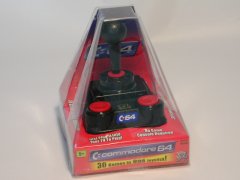
The C64 DTV is a joystick with a complete C64 Commodore inside. And it also contains about 30 games. Read more...
C64 - DTV software hacks
There are a few possibilities with the DTV that are not in the manual. These are called software hacks. Read more...
C64 - DTV with IEC, keyboard and joysticks
This article is about hacking a C64 DTV-1 (NTSC version). The following will be added: IEC (disk drive), keyboard and two joysticks. The C64 DTV-1 will be connected to an 1571 disk drive. Read more...
C64 - DTV2 with IEC, keyboard and joysticks
This article is about hacking a C64 DTV-2 (PAL version). The following will be added: IEC (disk drive), keyboard external power-supply and two joysticks. Read more...
C64 - DTV2 with keyboard, joysticks and a 1541-III
This article is about hacking a C64 DTV-2 (PAL version). The following will be added: 1541-III, keyboard, external power-supply and two joysticks. Read more...
C64 - DTV2 with IEC, keyboard, joysticks and color-fix
This article is about hacking a C64 DTV-2 (PAL version). The following will be added: IEC (disk drive), keyboard external power-supply and two joysticks. This DTV has an color-fix added. The C64 DTV-2 will build inside a new box. Read more...
C-one
The C-one is a reconfigurable computer. It has two FPGA's as processors. You can put a program inside the FPGA's. The program can emulate a processor. For example it can act like a C64 including all the chips inside the C64. Read more...
Xtreme Commodore Logo
This page is dedicated to my Xtreme Commodore Logo. And yes there is a Commodore computer inside the logo. Read more...
Input devices
You can use Commodore computers for about every application. But almost every application has an interaction with the user. For these interactions you need a input device. Read more...
Building a X1541 cable
It is possible to transfer a diskette from a 1541, 1540, 1570, 1571 or 1581 disk drive to a PC. For the transfer you need a special cable (X1541). Read more...
Building a XE1541 cable
It is possible to transfer a diskette from a 1541, 1540, 1570, 1571 or 1581 disk drive to a PC. For the transfer you need a special cable (XE1541). Read more...
Tape Transfer
So you have a great collection of original tapes or made programs yourself on tape and want to use them on an emulator. This page will describe how it is possible to read the tapes into your modern PC. Read more...
VICE
VICE stands for Versatile Commodore Emulator. VICE provides emulation of the Commodore C64, C128, VIC20, PET, PLUS4 and CBM-II computers within a single package. Read more...
CCS64
CCS64 is an emulation of the Commodore C64, 1541 disk drive and the datassette C2N in a complete package. Read more...
My museum
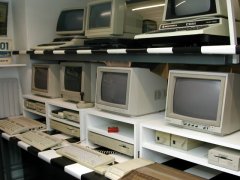
In the past years I have collected many Commodore computers and related items. In the beginning I had all items in a storage space because I could not put it in my home. But when I got a bigger house I started to make my museum. Read more...
CDi player Timekeeper IC repair
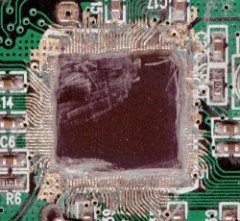
Inside a CDi player is a special IC where games can store data. This data is stored even when the CDi player is switched off. After a number of years the high-scores are not stored anymore. The Timekeeper IC does not function anymore. Read more...
Spot the Commodore (A-M)
You are watching tv, and you spot a Commodore computer. In this article you can see these pictures. (A-M) Read more...
Spot the Commodore (N-Z)
You are watching tv, and you spot a Commodore computer. In this article you can see these pictures. (N-Z) Read more...
Commodore C64 - Car wash
This article is about controlling a car wash with the help of a Commodore C64. The car wash is a product from the company Staudinger GmbH. Staudinger makes educational models that can be controlled with a PLC. Read more...
Commodore C64 - Pallet warehouse
This article is about controlling a pallet warehouse with the help of a Commodore C64. The pallet warehouse has 3 stepper motors to move the pallets in the X, Y and Z directions. Read more...
Asuro Robot
The Asuro Robot is a small in C programmable robot. The robot comes as a kit and has the following features: Two drive-motors, two signal LEDs, two odometry sensors, a line follow sensor, six collision switches, status LED and a serial communication (infra red) with a PC. Read more...
KCS Power Cartridge
The Power Cartridge is a BASIC-toolkit, fast loader/saver for disk (6x) & cassette (10x), a machine language monitor, function-keys, a printer-toolkit with hardcopy and a total back-up system for the Commodore C64 computer. Read more...
KCS cartridge
The KCS cartridge is a cartridge with a fast-loader, basic-toolkit, function-keys, etc. for the Commodore C64 computer. This cartridge is developed by the company Kolf Computer Supplies (KCS) in the Netherlands. Read more...